
The Truth About Tanning: Everything You Need to Know
- Jun 16
- 7 min read
By Courtney & Miranda
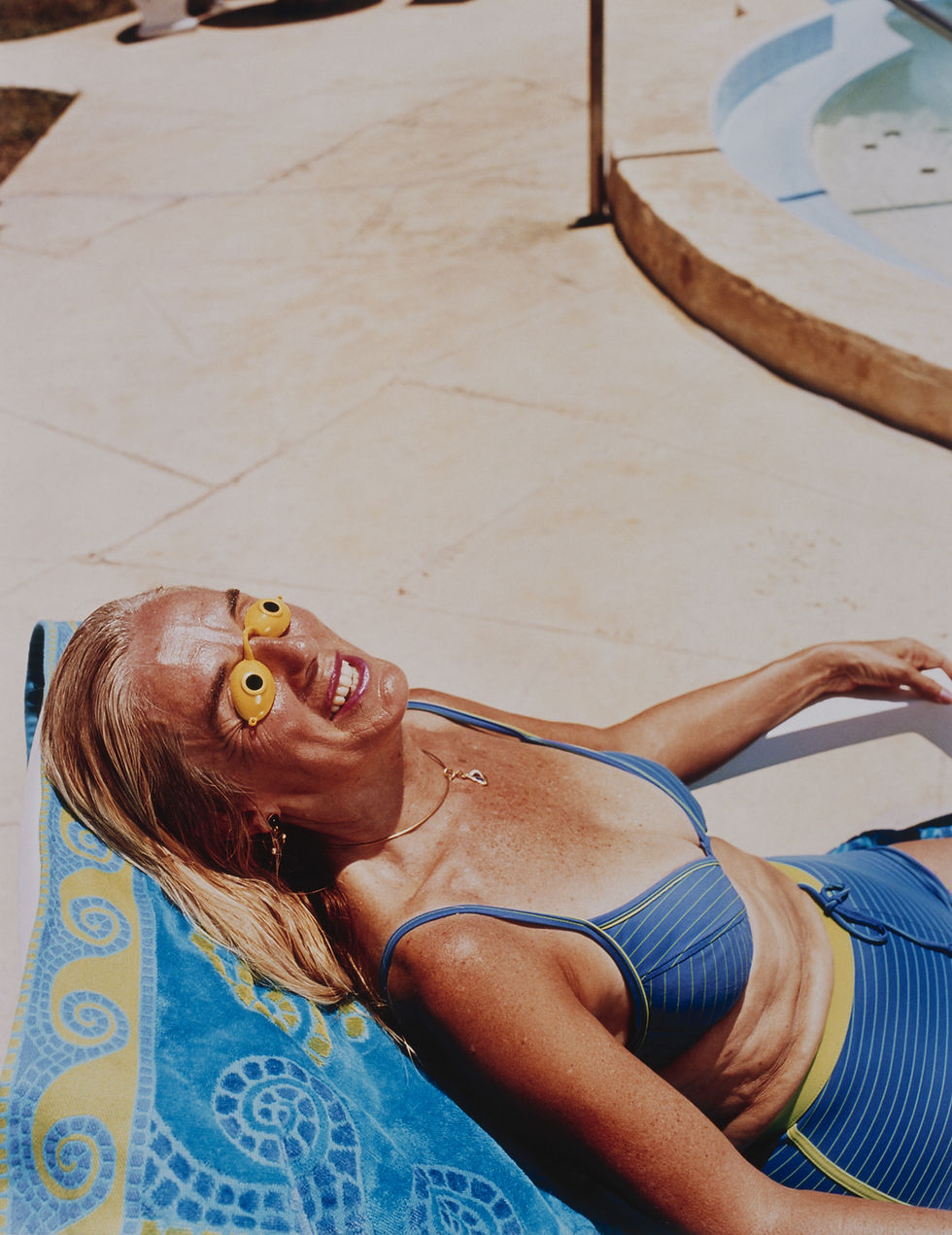
As Australians, we've all grown up with it. The idea that a tan is a sign of health and our culture. That sun-kissed skin means you've been somewhere warm, living well, glowing. It's woven into beauty culture so deeply that questioning it feels almost radical. Have an event? Having a tan is an accessory to your perfect outfit.
We all know sunburn is not good for our skin and that sunscreen is a necessity for an Australian summer. However, tan lines have recently become fashionable – even appearing on the catwalk.
Beauty culture aside - the evidence is clear: a tan is not a wellness marker. It's a damage response.
This week, we've been pulling apart the tanning conversation - from the science of what UV radiation actually does to your skin, to the apps now gamifying sun exposure for teenagers, to the myths that are still costing people their health. Here's everything in one place.
What Is a Tan, Really?
Let's start with the biology - because understanding what's actually happening under your skin changes everything.
Your skin contains cells called melanocytes, which produce a pigment called melanin. Melanin gives your skin its colour, and it also acts as your body's built-in defence system against UV radiation, absorbing it before it can damage deeper skin cells.
When your skin is exposed to UV radiation, your body produces more melanin to try to limit further injury. That's the darkening you see. That's your tan.
So a tan isn't a glow-up. It's a distress signal. It means your skin cells have already been exposed to more UV radiation than they could handle - and they're responding. Even a light tan is evidence that damage has occurred to the cells below the surface.
And sunburn? That's what happens when UV exposure outpaces your skin's ability to protect itself entirely. The redness and peeling is your body shedding dead and damaged skin cells. Even when the burn fades, the damage doesn't. UV gets into your DNA, causing mutations that stay in those skin cells long after your skin has healed. When enough mutations accumulate, that's what causes cancer.
Every burn increases your risk of melanoma. Every single one.
There is no such thing as a safe tan. There is no such thing as a healthy glow from UV exposure.
Understanding UV: UVA, UVB, and the UV Index
Not all UV radiation is the same and understanding the difference matters for how you protect yourself.
UVA penetrates deeply into the skin. It drives premature ageing, collagen breakdown, and long-term DNA damage. It's present year-round, even through clouds and glass.
UVB is primarily responsible for sunburn and direct DNA damage, and is the main driver of squamous cell carcinoma. Its intensity varies with the season, time of day, and UV Index.
Both UVA and UVB contribute to skin cancer risk. Any meaningful sun protection strategy needs to address both.
What Is the UV Index?
The UV Index is a standardised scale that measures the strength of UV radiation from the sun at a given time and location. It runs from 0 (no risk) to 11+ (extreme risk) and tells you how quickly unprotected skin can be damaged.
Here's what most people don't know: you don't need to feel hot, or even see direct sunlight, for UV radiation to cause harm. UV penetrates cloud cover. It reflects off water, sand, and concrete. It's present even on mild, overcast days.
Sun protection is recommended any time the UV Index reaches 3 or above. In most parts of Australia, that means year-round.
Check the UV Index before you head outside. The free SunSmart app from Cancer Council gives you real-time levels for your location.
SPF Myths You Need to Stop Believing
Misinformation about sunscreen is everywhere — and some of it is genuinely getting in the way of good skin health. Here are five of the most persistent myths, debunked.
Myth 1: "Sunscreen causes cancer."
There is no credible evidence that sunscreen causes cancer. What we do have is decades of evidence showing that UV exposure does.
The Nambour Skin Cancer Prevention Trial, a randomised controlled trial conducted in Queensland that followed over 1,600 Australians for more than a decade, found that those assigned to daily broad-spectrum SPF use had significantly fewer squamous cell carcinomas. A ten-year follow-up found the daily sunscreen group developed half the number of melanomas compared to those who used it only at their discretion.
No robust peer-reviewed study has demonstrated that sunscreen causes cancer.
Myth 2: "I only use mineral sunscreen because I don't want chemicals on my skin."
Zinc oxide, the active ingredient in mineral sunscreens, is not naturally occurring. It is synthesised in a laboratory. In fact, zinc sourced directly from nature often contains lead, a genuinely toxic heavy metal, which is precisely why pharmaceutical-grade zinc oxide must be manufactured synthetically.
Zinc oxide is a chemical. So is water. "Chemical-free" is not a scientific claim; it's a marketing strategy. Both chemical and mineral sunscreens are safe. Choosing between them should come down to your skin type and preference - not fear.
Myth 3: "My sunscreen is reef safe."
There is currently no globally accepted, legally defined standard for what "reef safe" means. It is a marketing term, not a scientific one.
Chemical sunscreen filters like oxybenzone and octinoxate have attracted attention for their potential impact on coral - but the studies underpinning those concerns were largely conducted in laboratory settings at concentrations far exceeding real-world exposure. Mineral sunscreens aren't off the hook either; emerging research suggests zinc oxide may also affect marine ecosystems under certain conditions. Coral bleaching is more likely caused by rising sea temperatures and agricultural run-off than your sunscreen.
Myth 4: "I have SPF in my moisturiser, so I'm covered."
To achieve the labelled sun protection factor, a sunscreen product must be applied at a concentration of 2mg per cm² - approximately two finger lengths of product across the face and neck. Most of us apply a fraction of that amount in the morning.
SPF in your moisturiser is a bonus. It is not a substitute for a dedicated sunscreen applied at an adequate amount.
Myth 5: "I have darker skin, so I don't need sunscreen."
This myth has real public health consequences. Melanin does provide some baseline UV protection (approximately SPF 13) but that is not sufficient, and it creates a false perception that sunscreen isn't required. Dermatologists recommend a minimum of SPF 30 for adequate daily protection for all skin tones.
Sun damage also manifests differently in darker skin tones - often as hyperpigmentation, uneven texture, and premature ageing rather than visible redness or burning. The damage is happening. It simply doesn't always look the same.
Tanning Apps: A Growing Problem
One of the more alarming developments in tanning culture this year has been the rise of tanning apps - smartphone applications that build personalised UV exposure routines for users seeking a "safe tan" or "healthy glow."
These apps ask users to choose their ideal skin tone - options like "espresso glow" or "golden bronze" - then recommend how long to spend in the sun, at what intensity, and with what products (including tanning oils and accelerants) to reach their goal.
Some are rated suitable for users as young as four. One ranks among the top free downloads in the Apple App Store weather category in Australia.
There is no safe UV exposure routine. A gradual tanning schedule is not safer than a quick burn. Any colour change in your skin indicates damage, regardless of how slowly it builds. And tanning oils and accelerants frequently contain ingredients that increase your skin's photosensitivity, raising your risk of severe burns.
Dermatologists and cancer researchers have been unequivocal: these apps are selling misinformation. They are particularly dangerous for young people, whose UV exposure early in life carries the highest lifetime risk of skin cancer.
If you see these apps promoted on your feed, that content may be violating platform policies. You can report misleading health claims in apps directly to the TGA.
What About Melanotan-II?
Also trending on TikTok and Instagram is a drug called Melanotan-II, sometimes called the "Barbie drug", being sold illegally online as a nasal spray or injectable that produces a rapid tan.
Melanotan-II is a synthetic version of a hormone produced in the pituitary gland that regulates your pigment cells. It works by mimicking that hormone, tricking your body into producing more melanin and darkening your skin - sometimes dramatically, within days.
It is banned in Australia. The TGA halted its development as a medicine specifically because of safety concerns.
Chief among those concerns is the drug's potential to cause melanoma. By overstimulating pigment cells, it can trigger abnormal cell proliferation — and case reports have described melanomas emerging from existing moles during or shortly after Melanotan-II use. The drug also has neurological effects, binding to receptors in the brain and causing nausea, vomiting, facial flushing, and other side effects.
Buying, supplying, and advertising Melanotan-II in Australia is illegal. If you're seeing it promoted on your social media feed, that content is breaking the law.
There is no shortcut to a safe tan. There is no safe tan. No aesthetic result is worth this risk.
The Bottom Line
Australia has the highest rate of skin cancer in the world. Around 2,000 Australians die from it each year. The good news is that it's one of the most preventable cancers — and the evidence for how to prevent it is clear.
There is no safe tan from UV exposure. A tan is a damage response.
Use broad-spectrum SPF 50+ sunscreen applied correctly — 2mg/cm² across the face and neck, reapplied every two hours.
Add UPF 50+ clothing, a wide-brim hat, and UV-protective sunglasses for comprehensive coverage.
Check the UV Index before you head outside, every day.
If you want a tan, use a self-tanner. It's the only safe option.
Avoid tanning apps, tanning accelerants, and anything claiming a "safe" or "healthy" UV routine.
Never use Melanotan-II. It's illegal, dangerous, and potentially carcinogenic.
Your skin is worth protecting. And the evidence to do it well is right here.
Pretty Proven is an evidence-based women's health and wellness platform founded by pharmacists. Our content is free, unbiased, and grounded in the research — not in marketing briefs.
For more evidence-based health content, follow us at @pretty.proven.


Comments